
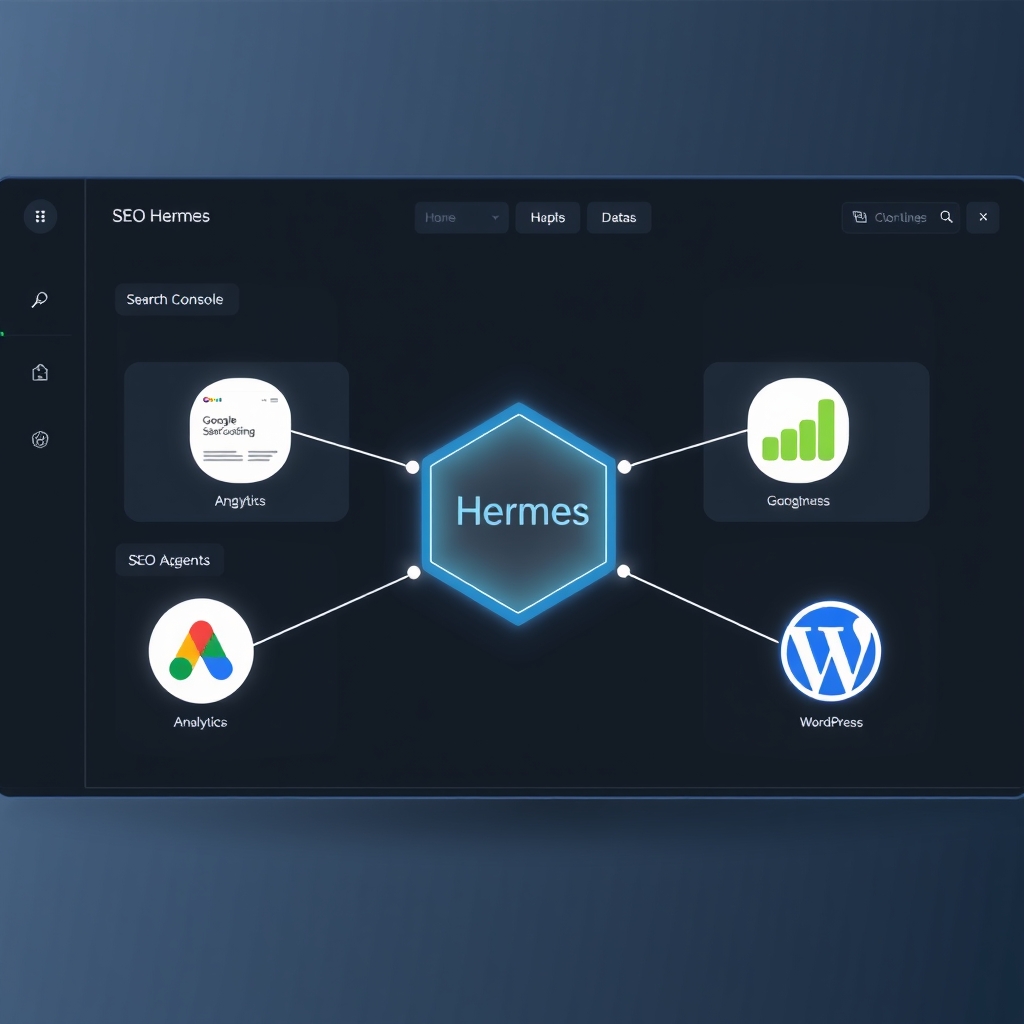
The SEO landscape in 2026 is no longer about manually publishing content; it’s about managing intelligent workflows. At Auriferous Technologies, we build products that leverage the power of AI, and one of the most significant shifts in the developer ecosystem is the adoption of Hermes Agent for website management.
Released under the MIT license by Nous Research, Hermes has quickly become the “breakout agent” of 2026, crossing 265,000 GitHub stars and seeing its search volume skyrocket to over 200,000 queries per month. For site owners, it represents the move from AI-assisted SEO (where you prompt and it writes) to AI-managed SEO (where you set a goal and it executes).
What Makes Hermes an “Operator,” Not Just a Writer?
Most people use AI as a faster typist: they ask for an article, paste it into their CMS, and hit publish. In this model, the human is still the project manager, the strategist, and the editor.
Hermes Agent works differently. It is a persistent, always-on operator that:
- Owns the Plan: It uses a planning prompt to perform competitor gap analysis and build a 90-day content calendar mapped to keyword clusters.
- Spawns Subagents: It splits work so that research, technical linking, and writing happen in parallel rather than sequentially.
- Schedules Itself: A single
/goalcommand can keep an agent publishing and improving a site’s SEO every morning while an “AI judge” scores each cycle.
The Three-Layer SEO Build
To run Hermes for SEO successfully, we recommend a layer-by-layer approach as outlined in guides from the Hermes SEO community:
- The Strategy Layer: Start with a comprehensive planning prompt that covers both traditional Google rankings and emerging AI search surfaces like Perplexity and Google AI Mode.
- The Execution Layer: Connect Hermes to your data sources—Search Console, SerpApi, and DataForSEO—so it works from real performance data rather than guesses.
- The Human Gate: This is the most critical part. In 2026, you should never let an agent run “unsupervised” on a live site. Hermes should draft, test, and report, while you provide the final approval for any changes that touch your production environment.
The Real Costs and Benefits
Setting up a Hermes SEO environment is surprisingly affordable. Most users spend between $30 to $150 per month, primarily on LLM provider costs. For agencies and developers managing multiple sites, the time savings are massive. You shift from the “blue link” era of manual audits to an agentic era where your agent reports back when it identifies a drop in rankings or a new opportunity.
Final Thoughts
If you are looking to stay ahead in the 2026 digital space, understanding tools like Hermes is essential. At Auriferous Technologies, we focus on the intersection of AI and consumer apps—check out our work on Live MCX & NCDEX for real-time data or our broader tech ecosystem. Understanding how these autonomous agents work can help you protect and grow your digital presence in an AI-first world.